/* WriteArt Master Self-Contained Stylesheet v6.2 */
.ai-ultimate-article-body {
font-family: -apple-system, BlinkMacSystemFont, “Segoe UI”, Roboto, Oxygen-Sans, Ubuntu, Cantarell, “Helvetica Neue”, sans-serif;
line-height: 1.85;
color: #1e293b;
font-size: 18px;
max-width: 100%;
margin: 0 auto;
word-wrap: break-word;
}
.ai-ultimate-article-body p { margin-bottom: 22px; color: #334155; font-size: 18px; line-height: 1.8; }
.ai-ultimate-article-body h2 { font-size: 28px; font-weight: 700; color: #0f172a; margin-top: 45px; margin-bottom: 20px; line-height: 1.3; border-bottom: 2px solid #f1f5f9; padding-bottom: 10px; }
.ai-ultimate-article-body h3 { font-size: 22px; font-weight: 600; color: #1e293b; margin-top: 30px; margin-bottom: 15px; line-height: 1.4; }
/* In-Text Contextual & External Authority Links */
.ai-ultimate-article-body a:not(.ai-btn-amazon-gold):not(.ai-btn-amazon-cart):not(.azai-smart-cta):not(.writeart-modal-open-btn) {
color: #0284c7;
text-decoration: underline;
text-underline-offset: 3px;
font-weight: 600;
transition: color 0.2s ease;
}
.ai-ultimate-article-body a:hover { color: #0369a1; }
/* Quick Answer & Callouts */
.ssai-quick-answer-card, .ai-quick-answer {
background: linear-gradient(135deg, #f0f9ff 0%, #e0f2fe 100%);
border: 1px solid #bae6fd;
border-left: 5px solid #0284c7;
border-radius: 12px;
padding: 18px 22px;
margin: 28px 0;
box-shadow: 0 4px 15px rgba(2, 132, 199, 0.08);
color: #0c4a6e;
}
.ssai-quick-answer-card p strong, .ai-quick-answer h2 {
font-size: 17px !important; color: #0284c7 !important; display: block !important; margin: 0 0 6px 0 !important; font-weight: 800 !important;
}
.ssai-quick-answer-card p, .ai-quick-answer p { margin: 0 !important; color: #0c4a6e !important; font-size: 16px !important; line-height: 1.6 !important; }
/* Key Takeaways Card */
.ssai-takeaways-card, .ai-callout-info {
background: linear-gradient(135deg, #f0fdf4 0%, #dcfce7 100%);
border: 1px solid #bbf7d0;
border-left: 5px solid #16a34a;
border-radius: 12px;
padding: 20px 24px;
margin: 28px 0;
box-shadow: 0 4px 15px rgba(22, 163, 74, 0.08);
color: #14532d;
}
.ssai-takeaways-card p strong, .ai-callout-info h4 {
font-size: 17px !important; color: #16a34a !important; display: block !important; margin-bottom: 8px !important; border-bottom: 1px solid #bbf7d0 !important; padding-bottom: 6px !important; font-weight: 800 !important;
}
.ssai-takeaways-card ul, .ai-callout-info ul { margin: 0 !important; padding: 0 0 0 20px !important; list-style-type: disc !important; }
.ssai-takeaways-card li, .ai-callout-info li { color: #166534 !important; font-size: 15px !important; line-height: 1.6 !important; margin-bottom: 6px !important; }
/* Top 10 Product Comparison Table */
.ai-table-responsive { width: 100%; overflow-x: auto; -webkit-overflow-scrolling: touch; margin: 30px 0; border: 1px solid #e2e8f0; border-radius: 14px; background: #ffffff; box-shadow: 0 4px 12px rgba(0,0,0,0.04); }
.ai-table-responsive table { width: 100%; min-width: 720px; border-collapse: collapse; text-align: left; font-size: 14.5px; }
.ai-table-responsive th { background-color: #0f172a; color: #ffffff; font-weight: 700; padding: 14px 16px; white-space: nowrap; font-size: 13.5px; letter-spacing: 0.3px; }
.ai-table-responsive td { padding: 14px 16px; border-bottom: 1px solid #f1f5f9; color: #334155; vertical-align: middle; }
.ai-table-responsive tr:nth-child(even) { background-color: #f8fafc; }
.ai-comparison-product-image { max-height: 85px; width: auto; object-fit: contain; display: block; margin: auto; }
.ai-badge { display: inline-block; padding: 4px 10px; border-radius: 999px; font-weight: 800; font-size: 11px; white-space: nowrap; }
/* Reverse Product Review Box (No. 10 to No. 1) */
.ai-product-review-box { background: #ffffff; border: 1px solid #e2e8f0; border-radius: 18px; padding: 28px; margin: 45px 0; box-shadow: 0 6px 18px rgba(0,0,0,0.04); }
.ai-pros-cons-grid { display: grid; grid-template-columns: 1fr 1fr; gap: 16px; margin: 22px 0; }
.ai-pros-box, .ai-cons-box { border-radius: 10px; overflow: hidden; border: 1px solid #e2e8f0; background: #ffffff; }
.ai-pros-header { background: #16a34a; color: #ffffff; font-weight: 700; font-size: 14px; padding: 8px 14px; }
.ai-cons-header { background: #dc2626; color: #ffffff; font-weight: 700; font-size: 14px; padding: 8px 14px; }
.ai-pros-box ul, .ai-cons-box ul { list-style: none !important; margin: 0 !important; padding: 12px 16px !important; }
.ai-pros-box li, .ai-cons-box li { position: relative; padding-left: 20px; margin-bottom: 8px; font-size: 14px; line-height: 1.5; color: #334155; }
.ai-pros-box li::before { content: “✔”; position: absolute; left: 0; color: #16a34a; font-weight: bold; }
.ai-cons-box li::before { content: “✖”; position: absolute; left: 0; color: #dc2626; font-weight: bold; }
/* 100% Clickable Active Amazon Gold & Cart Buttons */
.ai-card-action-dual { display: flex; flex-direction: column; gap: 8px; margin: 18px 0; }
.ai-btn-amazon-gold { display: inline-flex; align-items: center; justify-content: center; gap: 6px; background: linear-gradient(135deg, #ffd814, #ffa41c); color: #0f172a !important; text-decoration: none !important; font-size: 13px; font-weight: 800; padding: 10px 18px; border-radius: 8px; box-shadow: 0 4px 10px rgba(255, 164, 28, 0.25); text-align: center; border: 1px solid #fcd200; transition: transform 0.15s; cursor: pointer; }
.ai-btn-amazon-gold:hover { background: linear-gradient(135deg, #f7ca00, #fa8900); transform: translateY(-1px); }
.ai-btn-amazon-cart { display: inline-flex; align-items: center; justify-content: center; gap: 6px; background: #f8fafc; color: #334155 !important; border: 1px solid #cbd5e1; text-decoration: none !important; font-size: 12px; font-weight: 700; padding: 8px 14px; border-radius: 6px; transition: all 0.15s; text-align: center; cursor: pointer; }
.ai-btn-amazon-cart:hover { background: #eff6ff; color: #2563eb !important; border-color: #93c5fd; }
/* In-Text Amazon Smart CTA */
.azai-smart-cta { display: inline-flex; align-items: center; gap: 6px; background: #f0f7ff !important; border: 1px solid #bfdbfe !important; color: #1d4ed8 !important; text-decoration: none !important; padding: 3px 10px 3px 4px !important; border-radius: 999px !important; font-size: 0.92em !important; font-weight: 700 !important; margin: 0 3px; vertical-align: middle; }
.azai-cta-badge { background: #ff9900; color: #0f172a; font-size: 9px; font-weight: 900; padding: 2px 6px; border-radius: 999px; }
/* Single Product Scorecard */
.ai-single-scorecard-box { background: linear-gradient(135deg, #0f172a, #1e293b); border: 1px solid #334155; border-radius: 18px; padding: 28px; color: #fff; margin: 35px 0; }
/* AZAI Recommended Tools Section */
.azai-pro-section { margin: 44px 0; border: 1px solid #e2e8f0; border-radius: 16px; overflow: hidden; background: #fff; box-shadow: 0 10px 30px -10px rgba(0,0,0,0.06); }
.azai-pro-header { background: linear-gradient(135deg, #0f172a, #1e293b); padding: 26px 30px; color: #fff; }
.azai-pro-badge { font-size: 9px; font-weight: 800; letter-spacing: 1.6px; color: #60a5fa; background: rgba(96, 165, 250, 0.12); padding: 4px 8px; border-radius: 4px; display: inline-block; margin-bottom: 8px; }
.azai-pro-title { font-size: 22px; color: #fff !important; margin: 0 0 8px !important; font-weight: 800; }
.azai-pro-intro { font-size: 14px; color: #cbd5e1 !important; margin: 0 !important; line-height: 1.55; }
.azai-pro-card { display: grid; grid-template-columns: 36px 100px minmax(0, 1fr) 200px; gap: 18px; padding: 22px 26px; align-items: center; border-bottom: 1px solid #f1f5f9; }
.azai-card-num { font-size: 16px; font-weight: 900; color: #94a3b8; }
.azai-card-media img { max-width: 100px; max-height: 100px; object-fit: contain; }
.azai-tool-kicker { font-size: 10px; font-weight: 800; text-transform: uppercase; color: #059669; letter-spacing: 0.6px; margin-bottom: 4px; }
.azai-card-title a { font-size: 15px; font-weight: 700; color: #0f172a !important; text-decoration: none !important; line-height: 1.35; }
.azai-card-meta { display: flex; align-items: center; gap: 8px; font-size: 12px; margin-top: 6px; }
.azai-star-badge { color: #b45309; background: #fef3c7; padding: 2px 7px; border-radius: 4px; font-weight: 800; }
/* FAQs Accordion with Clean Expand/Collapse Indicator */
.ai-faq-item { border: 1px solid #e2e8f0; border-radius: 12px; margin-bottom: 14px; background: #ffffff; overflow: hidden; }
.ai-faq-item details { padding: 18px 20px; }
.ai-faq-item summary { font-weight: 700; color: #0f172a; cursor: pointer; font-size: 17px; display: flex; justify-content: space-between; align-items: center; list-style: none; }
.ai-faq-item summary::-webkit-details-marker { display: none; }
.ai-faq-item summary h3 { margin: 0 !important; font-size: 17px !important; color: #0f172a !important; border: none !important; padding: 0 !important; }
.ai-faq-item p { margin: 14px 0 0 0 !important; font-size: 15.5px !important; color: #475569 !important; line-height: 1.65 !important; }
/* Visual Media Container */
.ssai-ai-image-wrap { text-align: center; margin: 25px auto; max-width: 100%; }
.ssai-ai-image-wrap img { display: block; margin: 0 auto; width: 100%; max-width: 800px; height: auto !important; object-fit: contain !important; border-radius: 12px; box-shadow: 0 4px 14px rgba(0,0,0,0.1); }
.ai-article-figure-container { text-align: center; margin: 30px auto; }
.ai-article-figure-container img { max-width: 100%; border-radius: 10px; box-shadow: 0 4px 12px rgba(0,0,0,0.08); }
.ai-article-figure-caption { font-size: 13px; color: #64748b; margin-top: 8px; font-style: italic; }
/* POPUP MODAL STYLES */
.writeart-pro-modal { position: fixed; inset: 0; z-index: 99999999; display: flex; align-items: center; justify-content: center; }
.writeart-modal-backdrop { position: absolute; inset: 0; background: rgba(15, 23, 42, 0.75); backdrop-filter: blur(6px); cursor: pointer; }
.writeart-modal-panel { animation: writeartModalPop 0.25s ease-out; }
@keyframes writeartModalPop { from { opacity: 0; transform: scale(0.95); } to { opacity: 1; transform: scale(1); } }
@media (max-width: 768px) {
.ai-pros-cons-grid { grid-template-columns: 1fr; }
.azai-pro-card { grid-template-columns: 24px 70px 1fr; gap: 12px; }
.azai-pro-card .ai-card-action-dual { grid-column: 1 / -1; }
}
(function() {
function initWriteArtPopup() {
var modal = document.getElementById(‘writeart_global_modal’);
if (!modal) return;
function openModal() {
modal.style.display = ‘flex’;
modal.setAttribute(‘aria-hidden’, ‘false’);
document.body.style.overflow = ‘hidden’;
}
function closeModal() {
modal.style.display = ‘none’;
modal.setAttribute(‘aria-hidden’, ‘true’);
document.body.style.overflow = ”;
}
document.querySelectorAll(‘.writeart-modal-open-btn’).forEach(function(btn) {
btn.addEventListener(‘click’, function(e) {
e.preventDefault();
openModal();
});
});
document.querySelectorAll(‘.writeart-modal-close-btn, .writeart-modal-backdrop’).forEach(function(el) {
el.addEventListener(‘click’, function(e) {
e.preventDefault();
closeModal();
});
});
document.addEventListener(‘keydown’, function(e) {
if (e.key === ‘Escape’ && modal.style.display === ‘flex’) {
closeModal();
}
});
document.querySelectorAll(‘.writeart-modal-scroll-btn’).forEach(function(btn) {
btn.addEventListener(‘click’, function(e) {
e.preventDefault();
closeModal();
var target = document.getElementById(‘azai-full-table-anchor’) || document.getElementById(‘azai-master-comparison-table’);
if (target) {
target.scrollIntoView({ behavior: ‘smooth’, block: ‘start’ });
}
});
});
var exitShown = false;
try { exitShown = sessionStorage.getItem(‘writeart_exit_shown’) === ‘1’; } catch(e) {}
if (!exitShown) {
document.addEventListener(‘mouseleave’, function(e) {
if (e.clientY < 20 && !exitShown) {
exitShown = true;
try { sessionStorage.setItem('writeart_exit_shown', '1'); } catch(e) {}
openModal();
}
});
setTimeout(function() {
if (!exitShown && modal.style.display !== 'flex') {
exitShown = true;
try { sessionStorage.setItem('writeart_exit_shown', '1'); } catch(e) {}
openModal();
}
}, 20000);
}
}
if (document.readyState === 'loading') {
document.addEventListener('DOMContentLoaded', initWriteArtPopup);
} else {
initWriteArtPopup();
}
})();
💡 Quick Answer
Standard anti-camera license plate covers fail against modern automated enforcement infrastructure because they cannot defeat near-infrared illumination, global shutter sensors, and advanced optical character recognition (OCR) post-processing. While passive plastic shields attempt to block or refract light, modern ALPR systems utilize multi-spectral imaging and machine-vision algorithms that easily isolate alphanumeric characters through mild tints and physical distortions.
Automated traffic enforcement and tolling networks rely on sophisticated machine-vision hardware that transforms raw optical reflections into verified digital data strings in fractions of a millisecond.
Do Anti Camera License Plate Covers Work
📌 Key Takeaways
- Automated license plate readers combine high-intensity infrared (IR) flash arrays with high-speed global shutter sensors to capture motion-free images.
- Retroreflective sheeting on legal plates bounces concentrated light directly back to the sensor axis, a phenomenon physical covers attempt to disrupt.
- Transparent smoked or tinted acrylic covers absorb ambient light across the visible spectrum but fail when confronted with active infrared illumination.
- Prismatic lenticular lenses designed to scatter light at wide angles provide virtually zero deflection against direct, overhead enforcement cameras.
- Modern edge-computing processors apply digital contrast enhancement and thresholding algorithms that routinely bypass minor surface obstructions and optical filters.
Evaluating the efficacy of aftermarket plate accessories requires examining the exact optical pipeline used by municipal and private tolling systems. Automated license plate reader (ALPR) devices are not simple digital cameras taking snapshots. They operate as specialized optical sensors engineered to isolate high-contrast data under sub-optimal lighting and severe weather conditions.
The Physics of Automated License Plate Readers
Modern enforcement hardware utilizes active near-infrared (NIR) illumination. Instead of relying solely on visible ambient light, cameras fire pulsed IR bursts—typically in the 850nm to 940nm wavelength range—synchronized with the sensor exposure window. Legitimate state-issued plates are manufactured using retroreflective glass beads or prismatic microprisms designed to bounce that specific IR beam straight back toward the emitter-sensor origin. This creates an intensely bright background that makes the debossed or screen-printed black alphanumeric characters stand out with maximum contrast.
Aftermarket plastic covers attempt to hijack this optical feedback loop by placing a physical barrier between the plate surface and the camera sensor. However, the laws of optics dictate that any medium placed in the optical path introduces transmission losses, refraction, and surface glare. Manufacturers of these accessories claim their products render plates invisible to speed and red-light cameras. In practice, the physical reality is far less absolute.
Transparent Tints Versus Prismatic Shielding
Commercial plate covers generally fall into two distinct mechanical categories: smoked or tinted acrylic shields, and microscopic prismatic lenses. Tinted covers absorb or attenuate light across the visible spectrum. While they might reduce visual legibility for a human observer looking at the rear of a vehicle during daylight hours, they frequently remain transparent to infrared wavelengths. Because enforcement cameras capture images primarily in the IR spectrum, a tint designed to block visible light often permits infrared radiation to pass through with minimal attenuation.
Prismatic shields utilize thousands of tiny, directional plastic lenses molded into the surface. The design theory suggests that light striking the plate at an acute angle—such as from a side-mounted mobile speed van—will be refracted away from the sensor. Yet, urban automated enforcement infrastructure relies heavily on overhead gantry or intersection cameras positioned directly on-axis. Under a direct-on capture angle, prismatic lines fail to scatter the light effectively. Furthermore, advanced optical character recognition (OCR) software running on edge-processors can digitally amplify contrast, adjust gamma curves, and apply unsharp masking to recover obscured text.
When physical barriers fail to distort the underlying pixel data sufficiently, digital algorithms step in. Machine-vision pipelines use convolutional neural networks trained on millions of diverse plate images, allowing the system to accurately parse characters even when subjected to surface scratches, road grime, polarized glare, or aftermarket plastic distortions.
Machine Vision and Optical Character Recognition Recovery
The assumption that a physical barrier on a registration plate completely blinds an automated system is fundamentally outdated. Early automated license plate recognition (ALPR) architectures relied on basic thresholding and static binary segmentation. If a piece of tinted acrylic reduced the contrast ratio between the alphanumeric characters and the retroreflective background below a hardcoded threshold, the reader failed. Modern machine-vision pipelines operate differently. They ingest high-resolution infrared frames and execute deep-learning object detection models, such as YOLO variants coupled with advanced convolutional neural networks (CNNs), which are explicitly trained to isolate and reconstruct degraded visual inputs.
When a motorist mounts a smoke-tinted or polarized cover, the accessory scatters incoming illumination—particularly the high-intensity near-infrared (NIR) flashes utilized by modern traffic enforcement gantries. To an untrained human eye, the plate may look obfuscated. However, deep-learning OCR models bypass human perceptual limits. They leverage contextual clues, character geometry priors, and multi-frame temporal alignment from video feeds. If a single frame is washed out by glare, consecutive frames captured milliseconds apart during the vehicle’s approach vector often provide a clean transient angle where the specular reflection shifts, exposing the plate characters to the sensor array.
Furthermore, digital image restoration algorithms apply spatial filters, unsharp masking, and local adaptive histogram equalization directly to the captured region of interest. These post-processing steps artificially re-establish edge gradients around the stamped or flat-printed characters. Consequently, passive physical accessories rarely induce a total system failure. Instead, they trigger a fallback mechanism: if the automated confidence score dips below a designated operational threshold, the image file is flagged for human review by a municipal clerk rather than being permanently discarded. For deeper insights into how optical standards govern federal and state road safety, reference the Federal Highway Administration guidelines on traffic control devices.
Legal Ramifications and Enforcement Realities
Beyond the optical and computational variables, deploying plate-obscuring hardware places motorists directly in the crosshairs of state and local vehicle codes. Jurisdictions across the United States maintain explicit statutes prohibiting any material—transparent, translucent, or opaque—that obstructs the clear view, legibility, or retroreflective properties of a license plate. States like California (Vehicle Code Section 5201) and Texas (Transportation Code Section 502.409) specifically penalize covers that alter, conceal, or impair the readability of registration numbers, whether targeted by human eyes or electronic automated readers.
Diagnostic Evaluation: Law Enforcement Assessment Workflow
- Visual Inspection Vector: Traffic enforcement officers and specialized highway patrol units evaluate plate visibility from a standard 45-degree angle at a distance of 50 feet.
- Retroreflectivity Verification: Officers utilize direct flashlight illumination in low-light environments to test whether a cover degrades the mandated glass-bead or prismatic retroreflective return.
- Citation Issuance: If glare, yellowing, or tinting prevents full alphanumeric legibility from standard operational distances, a non-correctable or fine-based citation is issued under obstruction statutes.
- Escalation to Active Measures: While clear or tinted covers usually result in standard equipment violations, the deployment of active electromagnetic emitters or infrared LED anti-photo jammers crosses the threshold into misdemeanor territory or felony fraud charges in select jurisdictions.
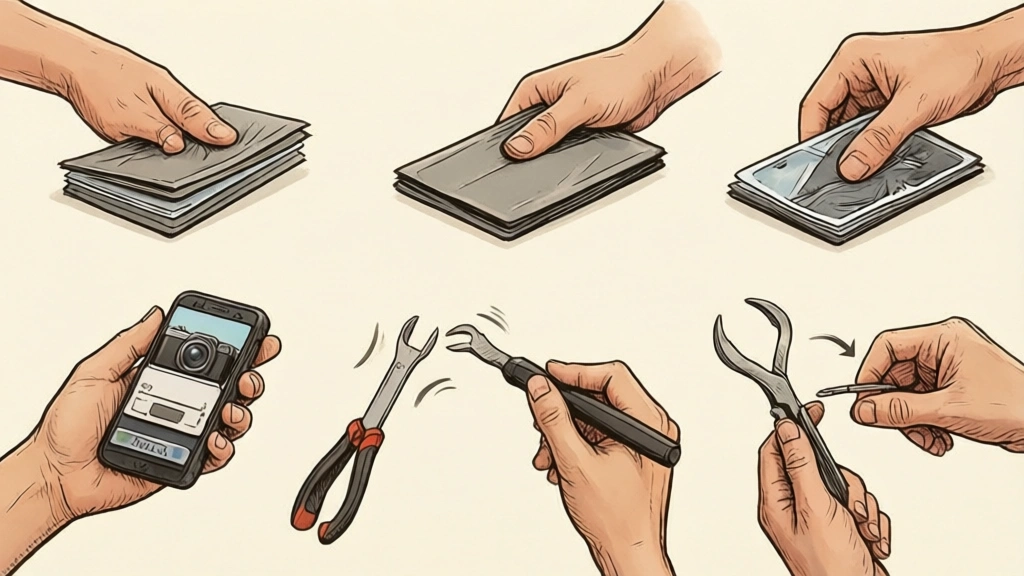
It is vital to distinguish between passive mechanical accessories and active electronic devices. Passive items—such as acrylic shields, bubble covers, and chemical spray lacquers—rely entirely on ambient light manipulation. Active countermeasures, conversely, employ synchronized photo-sensors that detect incoming camera strobes and instantly flash high-intensity infrared light back at the lens to saturate the sensor. Because these active devices actively interfere with electronic communications and public safety infrastructure, federal and state telecommunications and transportation laws treat them with extreme severity. Motorists researching safety equipment online frequently encounter consumer-grade Amazonanti glare license plate shields
, though their real-world efficacy remains heavily compromised by modern sensor suites.
Diagnostic Evaluation: Testing Methodology
Evaluating the true performance of an optical accessory requires replicating the exact environmental conditions utilized by state troopers and toll authorities. Traffic enforcement cameras do not rely on standard visible-light photography. They deploy high-speed shutter arrays paired with pulsed 850nm or 940nm near-infrared illuminators. This design cuts through heavy rain, snow, and total darkness while neutralizing the colors of the vehicle body.
To test an obscured plate accurately, evaluators must measure performance across three distinct vectors:
- Angular Dispersion: Testing whether the cover diffuses light uniformly or creates localized hot-spot glare that obscures specific characters while leaving others exposed.
- Spectral Transmittance: Measuring the percentage of infrared light absorbed versus transmitted through the polymer matrix of the shield.
- Motion Blur Threshold: Assessing how shutter speed synchronization interacts with the refractive index of the plastic at highway velocities.
Most consumer-grade covers fail under structured diagnostic testing because manufacturers optimize them for visible light suppression rather than near-infrared absorbance. When an 850nm NIR flash hits a cheap polycarbonate cover, the material often acts as an open window rather than a barrier, allowing the traffic camera to image the retroreflective plate background unimpeded.
Recommended Tools That You Need

Hopoocolor OHSP350S 350-950nm Spectrometer Grow Light
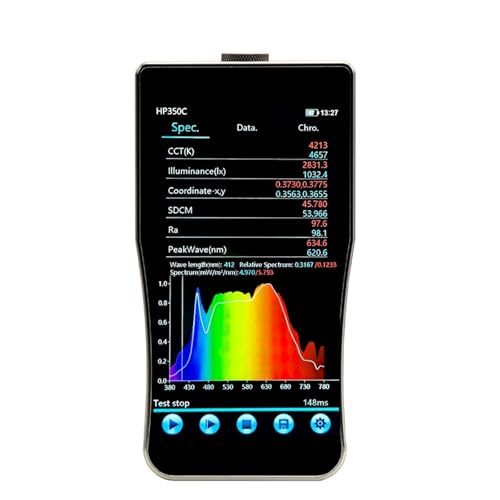
HP350C Portable Light Spectrometer Handheld Optical
Colorimeter, HP350C Portable Light Spectrometer Handheld
HP350C Portable Light Spectrometer Handheld Optical

HP310P Handheld PAR PPFD Spectrum Meter
Recommended Physical Diagnostic Tools
- High-output 850nm Infrared Illuminator Flashlight
- Digital Lux Meter for Surface Light Reflection Measurement
- Polarization Filter Test Card for Assessing Angular Distortion
- High-Resolution CMOS Camera with Adjustable Shutter Speed Controls
Frequently Asked Questions
Can traffic cameras see through smoked license plate covers?
Smoked and tinted license plate covers reduce visible light transmission, but modern automated traffic cameras primarily utilize near-infrared (NIR) spectrum imaging. Many inexpensive plastic tints are transparent to infrared wavelengths. While the plate may look dark to a human driver, the traffic camera’s NIR flash often penetrates the plastic, rendering the alphanumeric characters clearly readable to machine-vision software.
Are clear plastic plate covers illegal in California and Texas?
Yes. Even completely clear plastic covers violate vehicle codes in states like California and Texas if they collect dirt, yellow with age, create surface glare, or obstruct any portion of the registration validation stickers and characters. Law enforcement officers routinely issue citations for any aftermarket material placed over a state-issued license plate.
How do police toll cameras bypass anti-photo plate shields?
Tolling authorities and law enforcement agencies use multi-angle gantry cameras, high-resolution stereoscopic imaging, and advanced near-infrared strobes. Furthermore, modern back-end processing systems cross-reference partial reads with vehicle make, model, color, and RFID toll tags, allowing automated algorithms to successfully identify a vehicle even when portions of the license plate are obscured or degraded.
Do photo blocker sprays actually work on modern ALPR systems?
Photo blocker sprays claim to create a high-gloss, reflective barrier that bounces camera flashes back into the lens. In practice, independent laboratory testing demonstrates that these clear lacquers degrade quickly under UV exposure, weather elements, and road grime. They fail to disrupt modern polarizing filters and multi-exposure machine-vision capture systems utilized by municipal enforcement networks.
What happens if an automated camera cannot read an obscured license plate?
When an automated system fails to achieve a high-confidence match via Optical Character Recognition, the image file is transferred to a manual review queue. Human operators inspect the image, and if the obstruction appears intentional, the data can be forwarded to local law enforcement for targeted patrol dispatch or physical citation generation.
Conclusion
The persistent belief that passive optical accessories can reliably outsmart automated traffic enforcement is contradicted by the realities of modern machine-vision physics and deep-learning OCR architecture. While low-quality plate covers may occasionally degrade a single image frame, advanced near-infrared sensors, multi-angle gantries, and intelligent image reconstruction algorithms routinely neutralize these physical barriers. Ultimately, the deployment of plate-obscuring accessories introduces significant legal liabilities, transforming minor civil infractions into costly equipment citations and misdemeanor charges without delivering guaranteed operational anonymity.